Europe Is Sitting on a Drawer Full of Money and Doesn’t Know It
We partnered with OnePoll and asked 8,000 people across 11 European markets why they hold onto old tech. The answer is remarkably consistent, and it’s costing people more than they realise.
By Robert Fritsche, Country Manager (Germany) at Swappie and our C2B marketing expert
Somewhere in a drawer, a cupboard, or the back of a junk box, there’s an old phone that hasn’t been turned on in over a year. It’s not broken. It’s not even that old. It’s just… there. Waiting.
We wanted to understand why, so we surveyed 8,000 consumers across Belgium, Czechia, Germany, Denmark, Finland, Ireland, Italy, the Netherlands, Portugal, Sweden, and Slovakia. What we found holds remarkably steady across every market we looked at: people aren’t avoiding selling their old devices. They’re just not getting around to it. And it’s costing people more than they realise.
The backup device trap
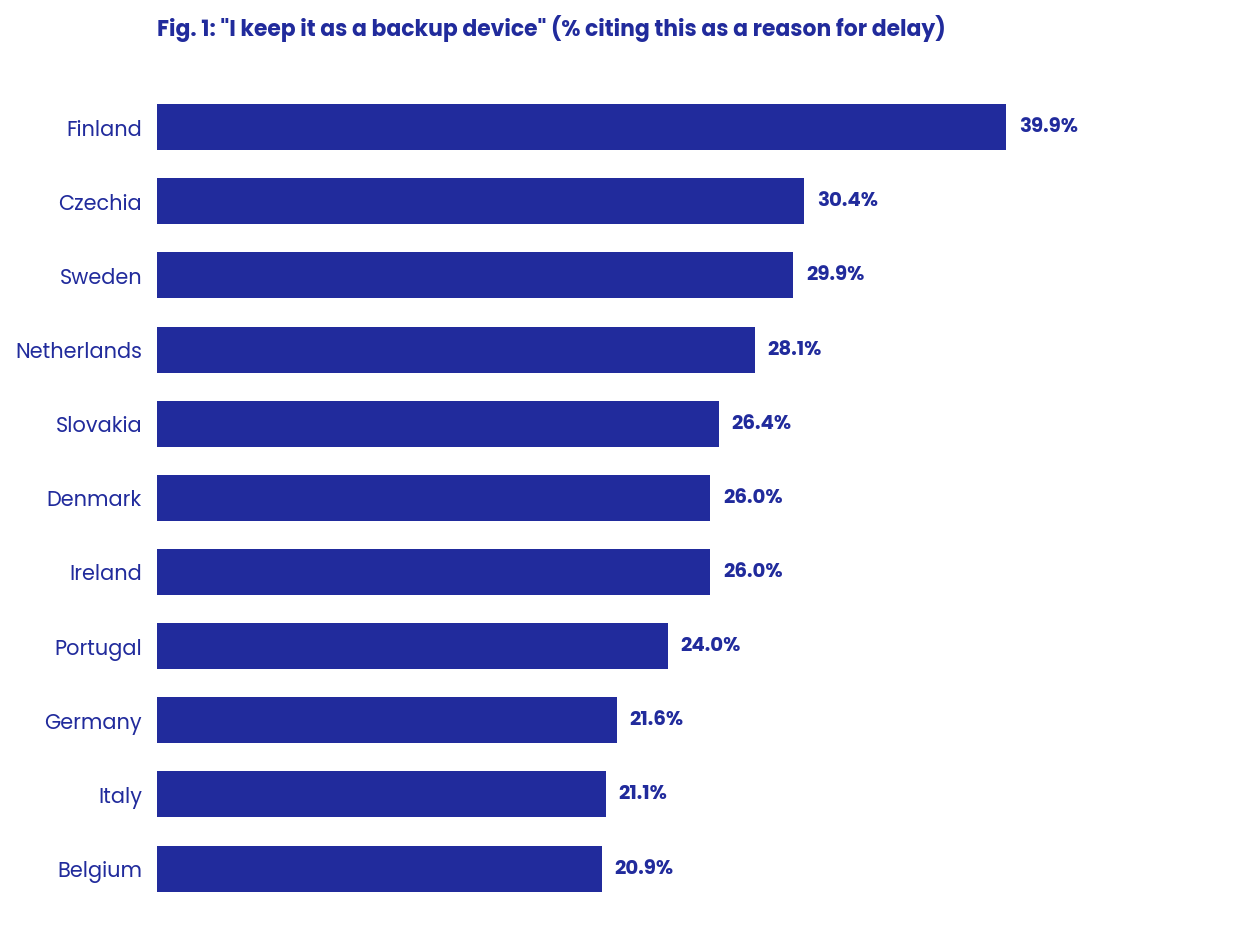
Across all 11 markets, 27% of people told us the main reason they never sold an old device is that they kept it “as a backup,” more than any other reason, ahead of not knowing where to sell, thinking it wasn’t worth anything, or finding the process too much effort.
The rate varies by market, but the habit itself shows up everywhere we looked. It’s less a national trait than a shared one. A phone that still works simply feels too useful to let go of, even once it’s been replaced.
Most of us think we’ve already lost money by waiting
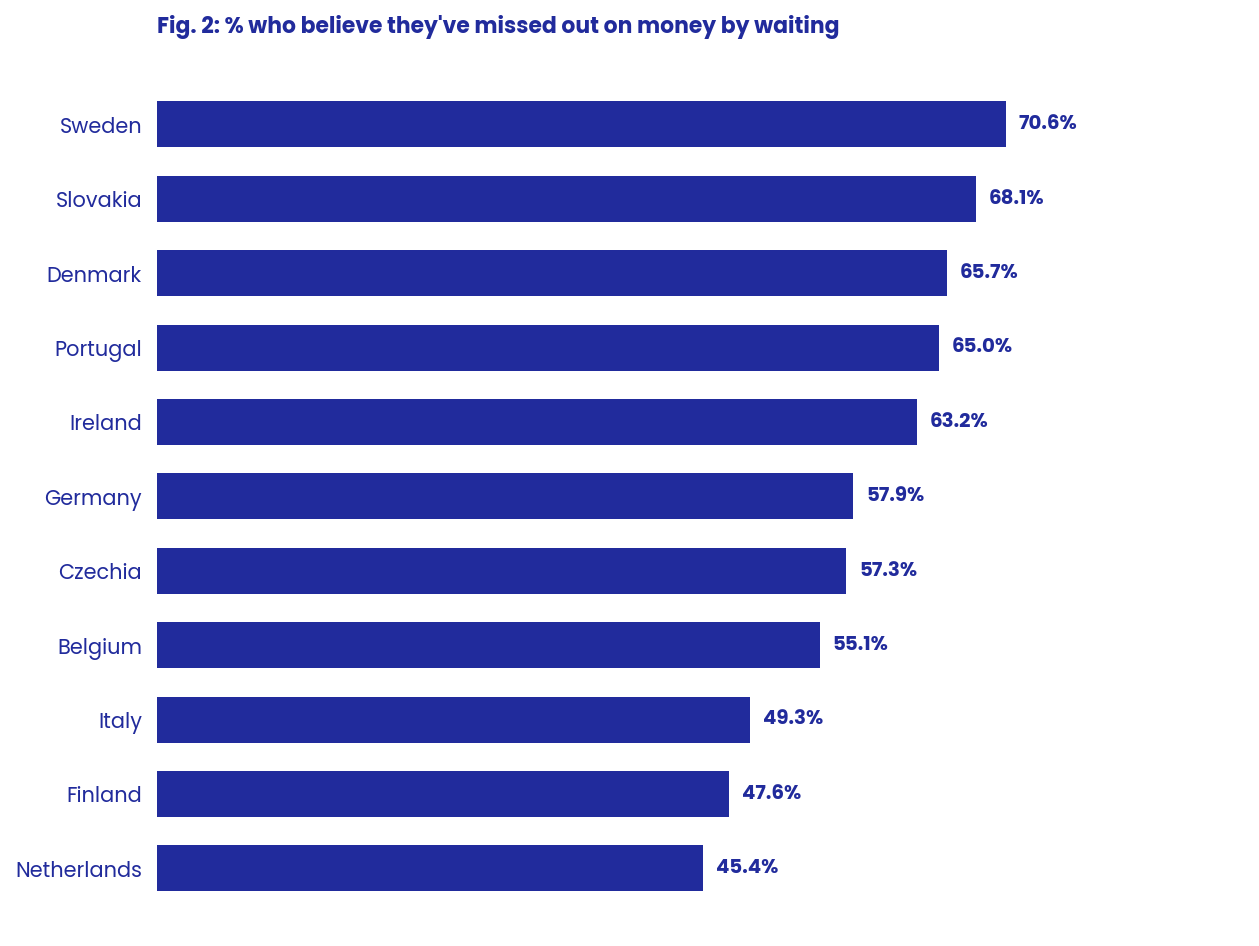
The hesitation isn’t free. 58% of the people we surveyed believe they’ve personally missed out on money by holding onto a device too long before selling it. That belief is widely shared, though some markets feel it more sharply than others.
Regret, but only up to a point
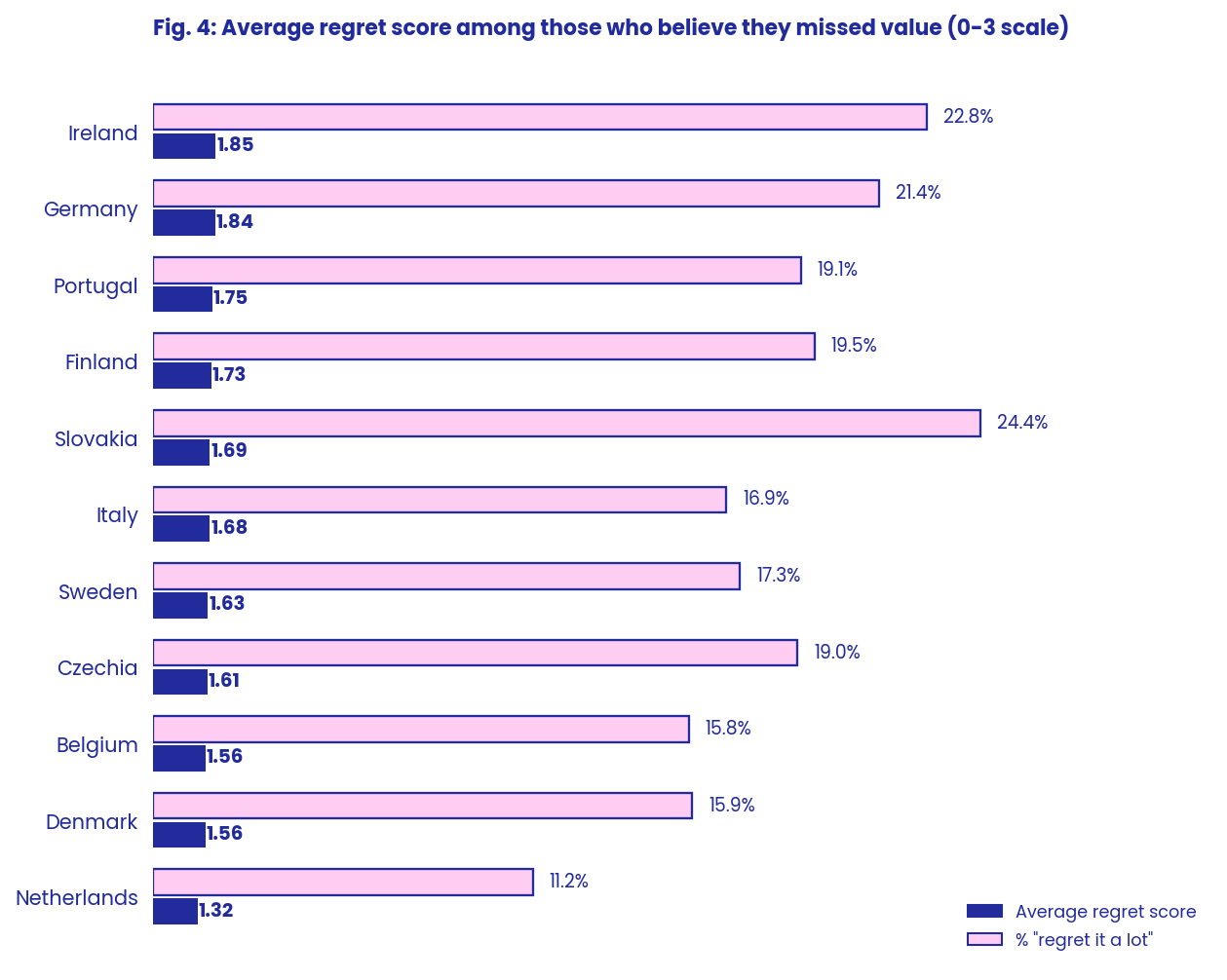
Among people who believe they’ve missed out on value, the depth of regret varies by market, but the more striking finding sits underneath the country-by-country differences. Even among people who know they left money on the table, most describe the regret as “a little” or “somewhat,” not “a lot,” almost everywhere we asked.
The financial loss, it seems, rarely stings as much as it logically should. That may be exactly why the drawer-phone problem persists. There’s no sharp moment of regret forcing a change in behaviour, just a slow, low-grade sense that something could have gone differently.
Knowing isn’t the same as doing
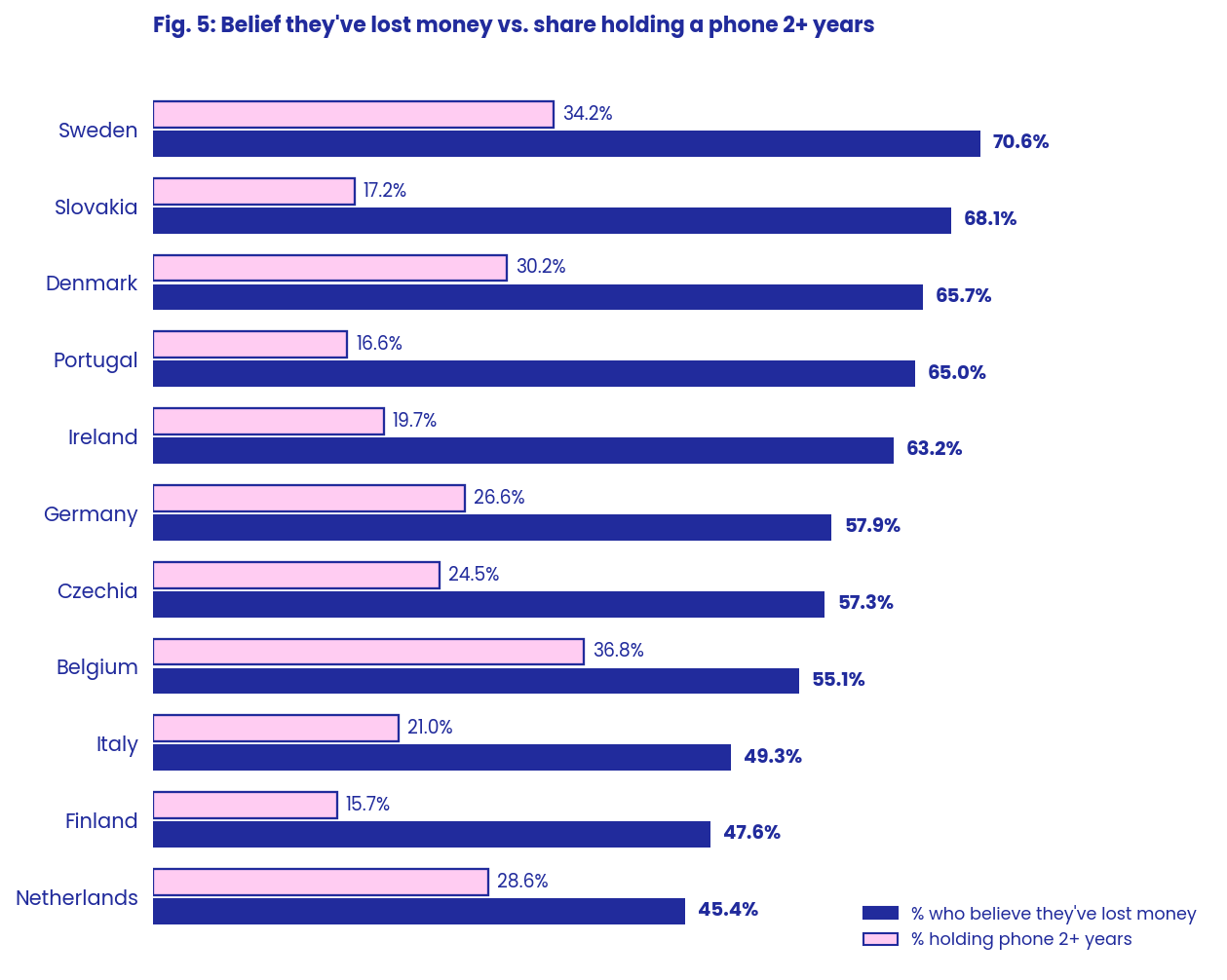
The clearest gap in our data is between what people believe and what they actually do. In the markets where people are most convinced they’ve lost money by waiting, that conviction doesn’t always translate into selling sooner: some of the most “aware” markets are also among the slowest to actually act, holding onto phones for two years or more at well above the average rate. Being financially switched-on, in other words, doesn’t automatically break the drawer-phone habit.
What would actually change people’s minds
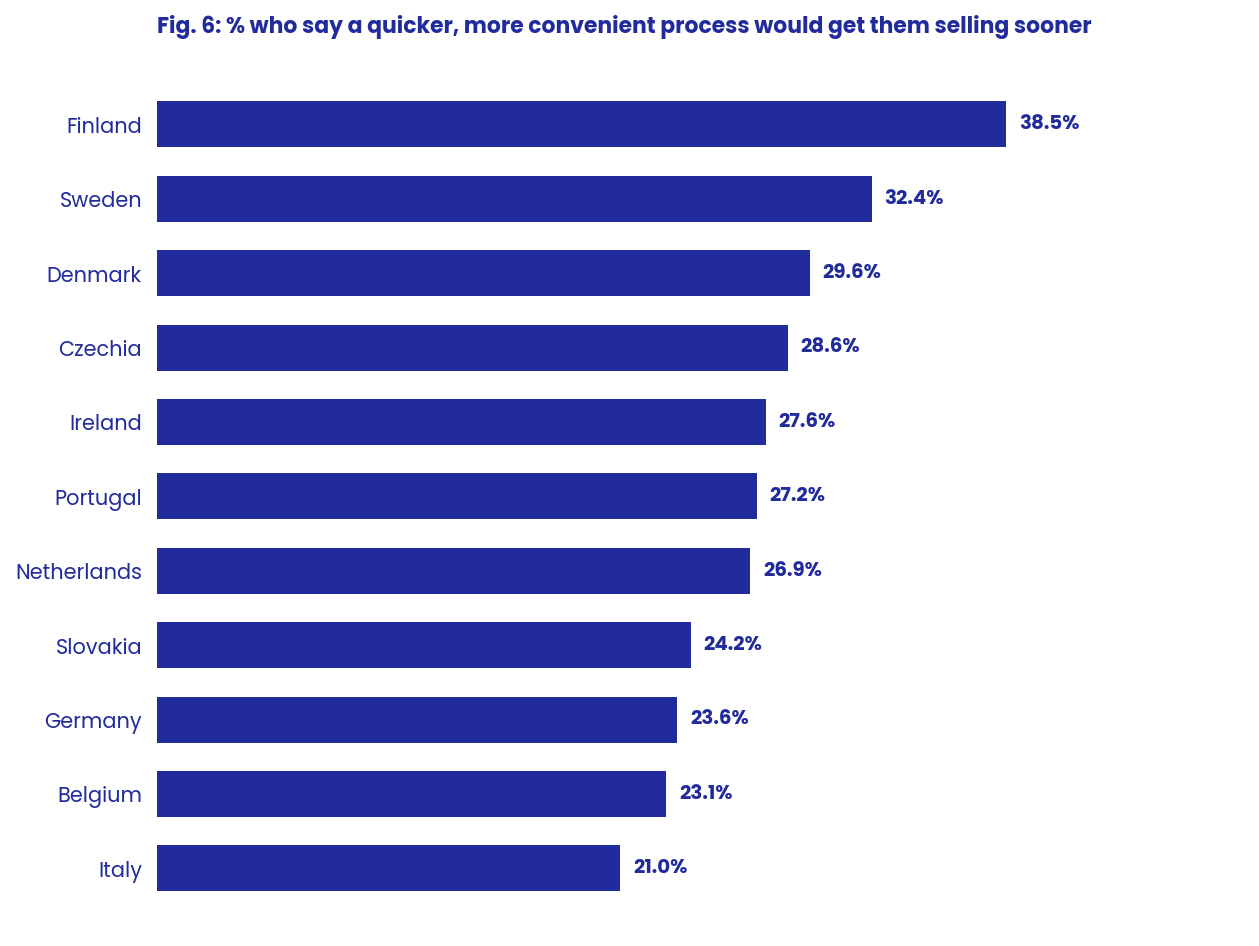
When we asked what would get people selling sooner, the top answers were strikingly consistent across every market: a quick, convenient process (28%), a guaranteed trade-in price (27%), and a clear, live estimate of what a device is currently worth (25%).
People aren’t short on reasons to sell. They’re short on a simple, trustworthy way to do it. That’s exactly why we built Swappie the way we did. As Europe’s leading iPhone refurbisher, with ten years of expertise in device inspection and refurbishment, we think that gap is ours to close.
Louise Care, Director of Research Operations at OnePoll, which conducted the study, said: “The research has revealed people are pretty unclear about the value their old tech could be holding, which means there’s untapped potential to make some extra cash sitting in drawers and cupboards at home, gathering dust.
Combined with the feeling of inconvenience when it comes to selling devices, opportunities are simply going missed to get rid of items they don’t necessarily want or need.
“But these days, devices are seemingly holding their value for longer, so now might be the time for people to revisit what’s housed in their junk drawers and turn these old items into money.”
Louise Care, Director of Research Operations, OnePoll
Robert Fritsche is Country Manager for Germany and Swappie’s C2B marketing expert. Off the clock, he’s a marathon runner, and lifelong ice hockey player who loves traveling with friends and family.
This online survey of 8,000 of the general population across Belgium, Czechia, Germany, Denmark, Finland, Ireland, Italy, The Netherlands, Portugal, Sweden and Slovakia was commissioned by Swappie and conducted by market research company OnePoll, in accordance with the Market Research Society’s code of conduct. Data was collected between 28/08/2026 and 02/09/2026. All participants are double-opted in to take part in research and are paid an amount depending on the length and complexity of the survey. This survey was overseen and edited by the OnePoll research team. OnePoll are MRS Company Partners, corporate membership of ESOMAR and Members of the British Polling Council.